An interview with artist Zooey Kraemer
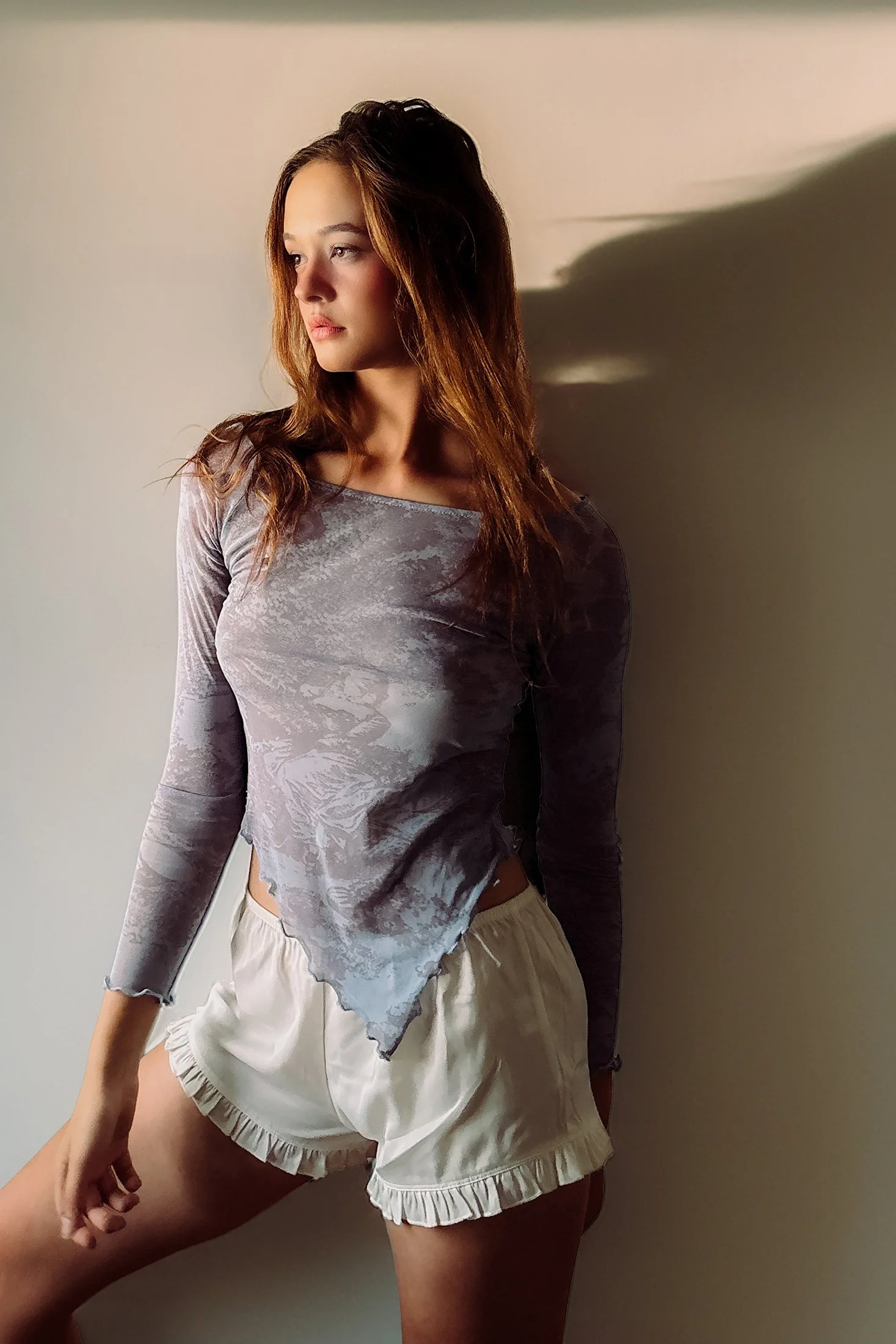
Zooey Kraemer
Timeless Work From A Current Artist
Zooey Kraemer is an artist, ballet dancer, model and actor residing in the Southern California area of the United States.
We recently connected and I was immediately struck by how engaging, unique, and memorable her painted works were. They have a mental tactile quality. They stick with you long after you’ve perceived them, and instill a sense of introspection.
Below is an interview with Zooey, which inquires into the state of her artistic process, as well as showcases some of her recent creations.
What genres of art, outside of fine art, feed your creative spirit?
Ballet is probably my greatest source of inspiration. Spending much of my life immersed in the art form has given me a deep appreciation for the way the human body moves, carries weight, and expresses emotion. It has also made me fascinated by the incredible things we, as humans, are capable of creating through our bodies. Beyond ballet, I find inspiration in nature and organic elements such as clay and stone, and I often draw visual connections between the body and other organic elements in my artwork.
Are there any non-visual artists such as musicians, or writers whose work feels like it feeds into your visual style?
I tend to be more inspired by ideas than by specific people. I'm drawn to work that leaves space for interpretation rather than telling the audience exactly what to think. That's something I hope to do visually as well.
How do you balance accurate human anatomy with emotional expression or abstraction?
I was born with an eye for understanding anatomy and proportions, and ballet has given me an environment to observe the human body in movement. I don’t have much of a process to combine the two. Sometimes a model's body is asking to be given deeper movement or earthy qualities and it happens naturally.
Did you receive training for your craft? (Did you go to art school, or are you self-taught?)
I am entirely self-taught. My mother was an artist and introduced me to the fundamentals of drawing, proportion, and color theory when I was young, but I've never attended art school. Everything beyond that has come through observation, experimentation, and a genuine desire to keep growing.
How do you select your models, and how much does their personality influence the final piece?
I typically work from vintage art books featuring photos of figure studies or attend local long-pose figure drawing sessions when I can afford to. While these models provide a foundation for anatomy and composition, I intentionally remove facial identity in my finished work. By doing so, the figure moves beyond the individual and becomes more universal, encouraging viewers to engage with the body itself rather than the person it represents.
When painting a figure, what is the hardest part to get right, and how do you fix it when a mistake occurs?
I am very particular about achieving accurate proportions, especially in my realistic pieces. Rather than approaching the figure all at once, I begin with whichever part of the body draws me in first—a hip, shoulder, or elbow—and build the composition one section at a time. About halfway through, I step away from the work and compare the overall proportions of the figure to my reference. Viewing the piece with fresh eyes makes it much easier to spot any inconsistencies and make adjustments before moving forward.
Is there a specific theme, texture, or concept you find yourself obsessing over in your current work?
I enjoy working with oil pastels and acrylics because they allow me to build layers and create depth throughout the pieces. Rather than mixing colors on a palette, I blend them directly on the paper or canvas. It's a more unpredictable process and can easily result in muddy colors if I'm not careful, but I enjoy the challenge and spontaneity that comes with it. I'm obsessed with oil pastel on canvas because of its rich, tactile quality—the thick layers of pigment create a texture that feels almost sculptural and adds another dimension to the work.
Looking back at your earlier material, what would you say has been the biggest shift in your style as an artist?
My work hasn't changed dramatically in style as much as it has evolved in scale. When I first started exploring the human form, my finished pieces fit inside a sketchbook no larger than the palm of my hand, but at the start of October 2025, I moved beyond sketchbooks and began creating larger works on canvas and paper. Since then, my practice has steadily expanded, and I now create works as large as 24 × 36 inches.
Do you prefer painting from live models, photographs, or from your imagination?
People ask me all the time if I ever paint from my imagination, and I always laugh because, contrary to what everyone seems to think, I'm not constantly imagining nude figures. I much prefer working from live models. There's something about observing a real person that makes the work feel more honest and engaging. I also enjoy the time constraint of a live session—it keeps me focused, prevents me from getting distracted and it allows me to keep a steady pace. I often find that I can complete an 18 × 24-inch piece within a single session.
What would you say is your biggest obstacle in creating work at this point in your life? (And has the obstacle changed over time?)
The biggest challenge is simply finding enough time to create and money to buy material. I'm balancing multiple creative careers while continuing to develop my work as a visual artist. Some weeks I'm creating every evening into the early morning, and other weeks I can't find the time or motivation to pump out a single piece.
Are you a museum person? (If so, got any favorites?)
I love spending time in museums because they allow me to slow down and truly observe. When I lived in Ohio dancing with Cincinnati Ballet, I would walk to the Cincinnati Art Museum nearly every weekend. There was one painting in particular that I always returned to: Young Man with Hatchet. It remains my favorite work of art that I've encountered. I'm captivated by the way the hatchet is almost concealed within the shadows, revealing itself only after you've spent time with the painting. The quiet ambiguity of the young man's expression continues to fascinate me—I still can't quite decide what he's thinking or feeling. To me, the painting carries a profound sense of loss and introspection. Every time I visited the museum, I would make a point to stop and spend time with him, whether that meant sketching the man or simply sitting in front of the painting and taking it in.
Popular music & movies seem to dominate the cultural conversations when it comes to art in our current era. What is your take on that and why do you think that is?
Music and film are woven into people's everyday lives, while fine art often requires someone to intentionally seek it out. I don't necessarily think one is more valuable than another—they're simply different ways of telling stories. Ultimately, all art has the ability to connect people emotionally.
What plays in your space when you’re creating? (Music, podcast, silence?)
I have one playlist I typically put on that consists of Elliot Smith, Nick Drake, and Radiohead. I'm especially drawn to music that evokes deep emotion —it quiets the noise around me and allows me to connect more fully with both the work I'm creating and myself.
What do you hope people will take away from experiencing your work?
Through my work, I strive to celebrate the individuality and natural beauty of the human form without over-sexualization, often drawing visual connections between the body and other organic elements. I intentionally omit the heads of my figures to shift attention away from facial identity and the immediate judgments so often tied to appearance. By presenting the unclothed body without recognizable features, I hope to encourage viewers to engage with the figure more openly and without preconceived bias.
At the same time, I don't believe my work is meant to be fully understood at a glance. The pieces carry intention, but they also leave room for interpretation. Art has always been, and always will be, subjective. More than anything, I hope people spend time with my work. I want them to linger, to question, and to discover their own emotional response rather than searching for a single "correct" meaning. If a piece of mine encourages someone to slow down, reflect, and feel, then I consider it successful.
You can follow Zooey on her Instagram at @Zooey_Kraemer and her website at: www.zooeykraemer.squarespace.com
Keep an eye on the publication for future photoshoots featuring Zooey.
Until next time,
-Oliver Endahl